

Table of Contents
- What Professional Coin Grading Actually Means
- The Coin Grading Scale Explained: The Sheldon 1-70 System
- The Professional Grading Process, Step by Step
- The Cost of Professional Coin Grading: Is It Worth It?
- Benefits of Third-Party Coin Grading
- Common Grading Mistakes and Myths
- Conclusion
- Frequently Asked Questions
Last Updated: September 15, 2026
What Professional Coin Grading Actually Means
Professional coin grading is when a trained numismatic expert assesses a coin's condition, assigns a standardized numeric score, and seals rare coins graded this way in a tamper-evident holder. This guide from MMmetalsandmore explains how that works, what it costs, and when it's worth pursuing.
A coin's value depends heavily on condition, which is subjective unless an independent authority verifies it. Professional coin grading solves that by putting a recognized, standardized number on the label.
Raw Coins vs. Certified Coins
A raw coin is any coin not sealed in a professional grading holder. Its grade is whatever a buyer and seller agree on, an agreement that often collapses when money changes hands.
A certified coin has been authenticated, graded, and encapsulated by a third-party grading service. The Royal Canadian Mint's guide to coin care and handling notes that proper handling and storage protect both condition and long-term value, which is exactly what encapsulation is designed to do.
At resale, a certified coin carries a grade any buyer can verify; a raw coin carries only the seller's word.
The Coin Grading Scale Explained: The Sheldon 1-70 System
The Sheldon Scale is the industry-standard 1-to-70 system describing a coin's condition, with 1 barely identifiable and 70 flawless (The Sheldon Coin Grading Scale). Almost every major grading service uses it, so "MS 65" means the same thing regardless of who issued the label.
From About Good to Mint State
The scale breaks into two broad worlds: circulated and uncirculated.
- Circulated grades (1-58): About Good (AG-3), Good (G-4), Very Good (VG-8), Fine (F-12), Very Fine (VF-20), Extremely Fine (EF-40), and About Uncirculated (AU-50 to AU-58).
- Uncirculated grades (60-70): Mint State (MS-60 through MS-70) and Proof (PF-60 through PF-70) for specially struck coins.
Four factors drive the final number: strike (how sharply the design was impressed), surface preservation (marks and hairlines), luster (the original mint bloom), and eye appeal (overall visual impression). A coin can have a strong strike and still grade lower because of distracting marks.
The Professional Grading Process, Step by Step
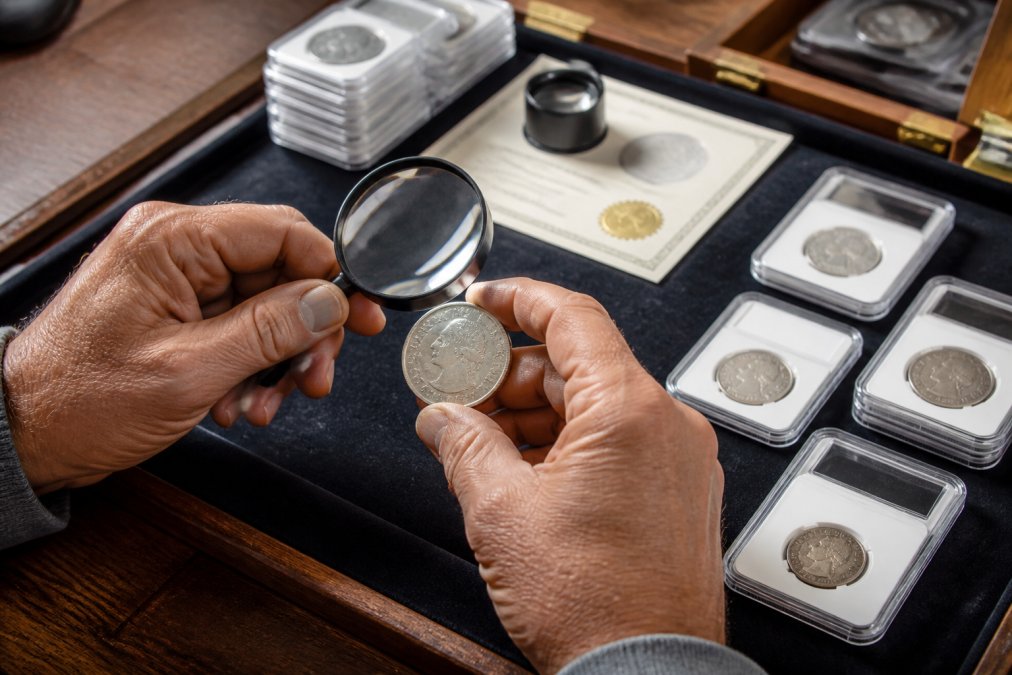
Here's what happens after you decide to submit a coin, from paperwork to the slab that comes back in the mail. Authentication comes first, then grading and encapsulation, but the practical steps around those stages are where first-timers get tripped up.

Step 1: Choose a Service and a Tier
Not all grading services carry the same market trust. A slab from a lesser-known service may not command the same resale confidence as one from a major, long-established grader, so your choice affects the coin's liquidity as much as its number.
Once you've chosen a service, you pick a submission tier. Tiers trade cost against turnaround: economy is cheaper but slower, express costs more but returns faster. You also declare a value, which sets both the fee and the insurance ceiling, too low risks under-insuring, too high raises your fee. Check current tier schedules before you commit.
Step 2: Prepare and Submit
Most services require a submission form listing each coin, its declared value, and the tier; some require a paid membership or minimum coin count. Package the coins individually protected so they don't rub in transit, and ship them insured to the grader.
Step 3: Authentication
Graders first confirm the coin is genuine, checking weight, diameter, metal composition, and die characteristics against known references (ngccoin.com). Counterfeits, altered dates, and cleaned coins are flagged here. A coin that fails authentication is returned ungraded, often in a "body bag" with a note explaining why, and you're still out the fees.
Step 4: Grading by Consensus
Multiple graders independently assess the coin, then reach consensus on a final score. That's why borderline coins can land a point or two apart from one grader's initial read, the number is a negotiated result, not one person's opinion.
Step 5: Encapsulation in the Slab
The coin is then encapsulated in a sonically sealed plastic holder, commonly called a slab. The label shows the grade, a unique certification number, and often a population report reference. The tamper-evident design makes any attempt to open the holder visible, the grade is only trustworthy if the holder is intact.
What Happens After Grading: The Slab Ecosystem
Most guides stop at the slab, but the holder is the start of a storage and handling regime, not the end of one.
- The slab is the coin's protection now. Once encapsulated, you no longer handle the coin directly, you handle the holder. That's the design: it removes the risk of fingerprints, hairlines, and skin oils that degrade raw coins.
- Storage still matters. Slabs should be kept away from extreme heat, direct sunlight, and humidity swings. Prolonged heat can warp a holder; UV exposure can fade labels. A cool, dark, stable environment protects both coin and label.
- Verify before you buy or sell. The certification number on the label can be checked against the grader's database to confirm the coin matches the record. This is how buyers catch a genuine slab that's been swapped with a different coin.
- Reholdering exists. If a slab is cracked, scratched, or damaged, services offer reholdering, moving the coin to a fresh holder without regrading it. This preserves the original grade while restoring the tamper-evident seal.
- Cross-grading is an option. If you want a coin graded by a different service, some graders will cross-grade it, evaluating the coin and issuing their own label, sometimes only if it meets or exceeds the existing grade.
A Realistic Timeline
Turnaround depends on the tier: economy submissions can take weeks or longer, express tiers compress that to days, and you add shipping time both ways. If you're selling on a deadline, factor turnaround into your decision before you submit.
The Cost of Professional Coin Grading: Is It Worth It?
Most guides dodge this question, explaining the Sheldon Scale in detail and then waving at "fees vary." But if you own a coin worth a few hundred dollars or less, the math, not the theory, decides whether grading is rational.
What You Actually Pay For
A grading submission is rarely just the grading fee. The total out-of-pocket cost stacks several line items:
- Grading fee, scales with the coin's declared value and the turnaround tier you choose.
The Break-Even Rule of Thumb
Run the arithmetic before you mail anything:
When It Clearly Pays Off
Grading is usually rational when:
When It Clearly Doesn't
Grading is usually a money-loser when:
| Coin Type | Typical Grading Value | Worth Submitting? |
|---|---|---|
| Common circulated coin | Low | Rarely |
| Key-date or low-mintage coin | High | Usually |
| High-grade uncirculated coin | Moderate to high | Often |
| Problematic coin (cleaned, damaged) | Low, likely ungraded | Rarely |
| Bullion coin (already certified) | Depends on premium | Only if resale demands it |
A Pre-Submission Checklist
Before you commit, confirm all of the following:
Benefits of Third-Party Coin Grading
Common Grading Mistakes and Myths
Other frequent mistakes:
Conclusion
Frequently Asked Questions
How much does it cost to have a coin professionally graded?
Most third-party grading services charge between $20 and $60 per coin for standard submissions, with higher tiers for faster turnaround or higher-value coins. For example, a coin worth $100 might cost $30 to grade, which can eat into your profit if you plan to sell. Always factor in shipping and insurance. If the coin's market value is below the grading fee, it's usually better to keep it raw.
How do I get my coins professionally graded?
First, identify the grading service you want to use, such as PCGS or NGC. Then, submit your coins through their online submission form, package them securely, and ship them insured. You'll pay a tier fee based on the coin's value and turnaround time. Once graded, the coins are encapsulated in tamper-evident slabs and returned to you with a certificate. Many collectors submit through authorized dealers for convenience.
What is the difference between a raw coin and a slabbed coin?
A raw coin is not encapsulated and has no official grade from a third-party service. A slabbed coin is sealed in a tamper-evident plastic holder with a label showing its grade, authentication, and certification number. Slabbed coins typically sell for more because buyers trust the grade. For example, a raw 1923 Peace Dollar might sell for $30, while the same coin graded MS63 by PCGS could fetch over $100.
Is it worth getting my rare coins professionally graded?
It depends on the coin's value and your goals. If the coin is worth more than $200 and you plan to sell, grading often increases its market value and makes it easier to sell. For low-value coins, the cost of grading can exceed the coin's value. Consider the coin's rarity, condition, and demand. If you're unsure, consult a reputable dealer or use a grading service's value tiers to estimate potential returns.
This article is for general information and does not constitute financial or investment advice. Always verify current grading fees and policies directly with the grading service before submitting coins.