

Table of Contents
- What Gold Purity Actually Means
- Gold Purity Chart: Percentages by Karat
- 24K vs 18K Gold: Trade-Offs in Durability and Color
- Best Gold Purity for Jewelry by Wear Scenario
- How to Check Gold Purity: Hallmarks and Tests
- Choosing Purity for Bars, Coins, and Fractional Pieces
- Care, Repair, and Resale by Karat
- Conclusion: Matching Purity to Purpose
- Frequently Asked Questions
Last Updated: October 9, 2026
What Gold Purity Actually Means
Gold purity is the measure of how much of a piece is actual gold versus how much is another metal mixed in. That's the whole question.
At MMmetalsandmore, we field this question constantly from first-time buyers, and the honest answer is that "best" depends entirely on what you're buying gold for.
Pure gold is soft. Left on its own, it bends, scratches, and loses shape under ordinary handling.

How Karat Measures Gold Purity
Karat is the unit that expresses gold purity on a 24-part scale, where 24K equals 100% gold. Each karat represents roughly 4.17% of the total.
So a 14K piece is 14 parts gold out of 24, or about 58.3% gold by weight. An 18K piece is 18 parts gold, or 75%.
The Canadian Competition Bureau guidance on precious metal advertising requires dealers to describe these compositions accurately, so the karat stamp on a piece is a legal claim, not a marketing flourish.
Gold Purity Chart: Percentages by Karat
The gold purity chart below is the reference point for everything that follows. Match your intended use to the percentage, not the other way around.
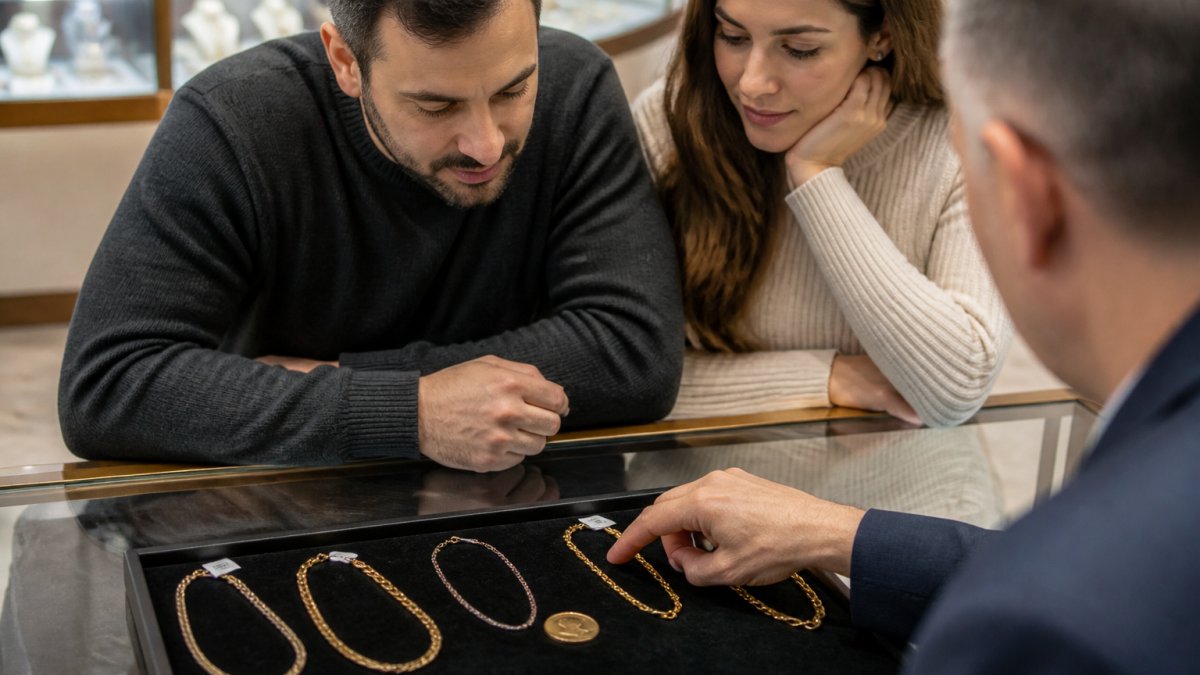
| Karat | Gold Percentage | Common Use | Durability |
|---|---|---|---|
| 24K | 99.9%+ | Bars, coins, investment pieces | Very soft |
| 22K | 91.7% | Cultural and bridal jewelry | Soft |
| 18K | 75.0% | Fine and luxury jewelry | Moderate |
| 14K | 58.3% | Everyday rings and chains | Good |
| 10K | 41.7% | Budget jewelry, active wear | Very good |
The pattern is consistent: as the gold percentage climbs, durability falls. That trade-off is the single most useful thing to understand before you buy anything.
24K vs 18K Gold: Trade-Offs in Durability and Color
For a piece you'll wear daily, 18K is the better choice.
24K gold is the deepest, warmest yellow you'll see, because nothing is diluting the color.
18K keeps 75% gold, so the color stays rich, but the 25% alloy gives it enough structure to survive normal wear.
What most guides miss is that 18K is not automatically "better" than 14K. It's softer and costs more per gram.
Best Gold Purity for Jewelry by Wear Scenario
The best gold purity for jewelry depends on how often you wear it, how rough you are with it, and what your skin tolerates. There is no universal winner, but there is a defensible answer for almost every scenario.
Here's how we'd break it down:
- Daily rings and bracelets: 14K. At 58.3% gold, it holds shape, resists scratching, and costs less per gram than 18K. For anyone who wears a ring through dishes, gym sessions, and keyboard work, this is the practical default.
- Occasional fine jewelry: 18K. At 75% gold, the color stays rich and it reads as a step up, but it is softer than 14K and will show wear faster if worn constantly.
- Cultural or bridal sets: 22K. At 91.7% gold, this is the traditional choice where color depth and gold content matter most. Expect to handle it gently and to have limited repair options.
- Investment pieces: 24K. Maximum gold content, no wear expectation. Keep it in its holder.
- Active wear and children's jewelry: 10K. At 41.7% gold, it is the most durable common option, though the lower gold content means less metal value.
A useful way to think about it: pick the lowest karat you are comfortable with for the wear pattern, then move up only if color or cultural expectation requires it.
Skin Sensitivity and Alloy Metals
Nickel is the alloy metal most likely to cause a reaction, and it appears in some lower-karat white gold blends. If you've had a green or itchy mark from a ring, nickel is the usual suspect.
Yellow gold and rose gold typically use copper and silver rather than nickel, which makes them the safer default for sensitive skin.
If you have reacted before, ask the seller for the alloy breakdown in writing before you buy.
A Quick Decision Guide
If you want one line per use case:
| Scenario | Recommended Purity | Why |
|---|---|---|
| Everyday ring or bracelet | 14K | Best balance of durability and cost |
| Fine jewelry worn occasionally | 18K | Richer color, acceptable wear |
| Bridal or cultural set | 22K | Traditional color and gold content |
| Investment or display | 24K | Maximum gold content |
| Active wear or kids | 10K | Most durable common option |
| Sensitive skin | 14K or 18K yellow/rose | Avoids nickel-bearing white gold blends |
That table is the short answer to the keyword. Everything else in this article explains why those recommendations hold.
How to Check Gold Purity: Hallmarks and Tests
The first thing to do is look for a hallmark.
Reading the numbers is straightforward:
2026 Liberia Casino High Roller 1/1000 oz .9999 Pure Gold Coin in Assay Card →
- 999 or 999.9 means 24K, used on bars and bullion coins
- 750 means 18K
- 585 means 14K
- 417 means 10K
If there's no stamp, that's a signal, not a verdict. Older pieces and some imported jewelry skip it.
For at-home checks, the magnet test is the easiest starting point: pure gold is not magnetic, so a piece that sticks to a magnet is not solid gold.
None of these methods confirm purity on their own. Natural Resources Canada's overview of gold and its properties is a useful reference for understanding why gold behaves the way it does under testing.
For anything valuable, take it to a qualified jeweler or appraiser who can use X-ray fluorescence or fire assay. Those methods measure composition without harming the piece.
Choosing Purity for Bars, Coins, and Fractional Pieces
For bars and coins, purity is close to settled: you want 24K, marked as .999 or .9999 fine.
Fractional pieces follow the same rule. A 1/1000 oz coin struck in .9999 fine gold carries the same purity standard as a one-ounce bar, just in a smaller format.

That's where our own catalogue leans. The 2026 Liberia Casino High Roller 1/1000 oz .9999 Pure Gold Coin is struck in .9999 fine 24K gold, sealed in an assay card with a built-in Certificate of Authenticity, and capped at 9,999 pieces worldwide. The Solomon Islands Remembrance Day 1/1000 oz coin runs at 99.9% fine gold in a 20mm format, permanently encapsulated in a collector card that doubles as its certificate.
For buyers who want certified grading alongside purity, the ICG MS70 Eagle Head 1/500th oz round arrives slabbed and graded, which removes the guesswork about condition.
| Piece Type | Purity | Best For |
|---|---|---|
| Bullion bars | .999-.9999 | Pure metal value |
| Sovereign coins | .999+ | Collectors and investors |
| Fractional coins | .999-.9999 | Entry-level stacking, gifting |
| Graded rounds | .999 | Certified condition buyers |
Care, Repair, and Resale by Karat
Higher karat means gentler handling, and that principle runs through cleaning, repair, and resale. Most guides stop at "be careful with 24K." Here is what actually changes by karat.
Cleaning by Karat
Warm water with a drop of mild soap and a soft cloth handles most pieces. The karat changes the risk, not the method:
- 24K and 22K: Clean with a soft cloth only. These metals scratch and deform easily, so avoid brushes and abrasive polishes.
- 18K: Mild soap and water is fine. Skip ultrasonic cleaners on anything set with stones or plated, since vibration can loosen settings.
- 14K and 10K: More forgiving. Ultrasonic cleaning is usually safe for plain metal, but still avoid it on plated or stone-set pieces.
Rhodium-plated white gold is a special case. The plating wears off over time, especially on rings, and re-plating is a routine maintenance cost rather than a defect.
Repair and Resizing by Karat
Repair is where karat really shows its hand. A 22K or 24K piece is difficult to resize or re-tip because the metal moves under the torch and can distort or melt at temperatures that would be safe for lower-karat alloys.
- 24K: Generally not resizable. Soldering is risky and the piece may lose shape.
- 22K: Resizing is possible but limited, and many jewelers will refuse complex work.
- 18K: Resizable and repairable by most jewelers, though softer than 14K.
- 14K and 10K: The easiest to resize, re-tip, and repair. This is one reason they dominate everyday jewelry.
If you plan to resize a ring over time, or you expect repairs, lower karat is the practical choice. A 14K piece resizes easily and holds the repair.
Resale Value by Karat
Resale follows the same logic as repair, but the math is different. Bullion-grade gold, whether a bar or a .9999 coin, sells close to spot because the metal is the product. Jewelry sells on a mix of metal value and design, and higher karat does not automatically mean a better return.
A few patterns worth knowing:
- Bullion and coins: Purity is the product. .999 or .9999 fine gold is the standard, and anything less is harder to resell at full value.
- Jewelry: A 14K ring with a strong design can outsell an 18K ring with a weak one. Buyers pay for wearability and style as much as for gold content.
- Scrap value: A dealer will typically pay based on the gold content by weight, minus a margin. Higher karat means more gold per gram, but the margin and the dealer's process still apply.
- Collector pieces: Certified grading, limited mintages, and presentation packaging can add value beyond the metal. A graded round or a sealed coin with a Certificate of Authenticity is easier to resell than a loose piece of the same purity.
The takeaway is that purity supports resale value, but it does not guarantee it. Design, condition, certification, and the buyer's market all matter.

Buy 24K for metal value and 14K for wear. Everything between is a compromise you should make deliberately, not by default. And if you plan to resize or repair, let that push you toward the lower karats.
Conclusion: Matching Purity to Purpose
The right gold purity is the one that matches what you're actually going to do with the piece. Wear it daily, and 14K gives you the best balance of durability and cost. Hold it as an asset, and 24K at .999 or finer is the standard. Display it, gift it, or collect it, and the fractional pieces in our catalogue let you own certified fine gold without a large outlay.
Frequently Asked Questions
What gold purity is best for everyday wear?
For daily jewelry like rings and bracelets, 14K gold is the practical pick. It contains 58.3% gold mixed with alloy metals, which gives it the hardness to resist scratches and dents that softer high-karat gold cannot handle. 18K (75% gold) works for earrings and necklaces that see less friction. If you want a piece that holds its shape through years of wear, stay in the 14K to 18K range rather than 22K or 24K.
Is 24K gold the best choice for investment?
For bullion bars and investment coins, 24K is the standard because it is 99.9% or higher pure gold, so its value tracks the spot price closely with no alloy content to discount. The 2026 Liberia Casino High Roller coin is struck in .9999 fine 24K gold, for example. For jewelry you plan to wear, 24K is too soft and will bend or scratch, so purity should match the purpose.
How can you check gold purity at home?
Start with the hallmark or fineness stamp. Look for marks like 999, 750, or 585 inside a ring band or on a coin face. A magnet test helps: pure gold is not magnetic, so if a piece sticks, it contains magnetic base metals. Acid test kits and electronic testers give more reliable readings but can damage finishes. For valuable pieces, a jeweler or assay office can confirm purity without risk.
Does 18K gold tarnish easily?
18K gold contains 75% gold and 25% alloy metals such as copper and silver. The gold itself does not tarnish, but those alloy metals can oxidize or discolor over time, especially with exposure to sweat, chlorine, and household chemicals. White gold is usually rhodium-plated to slow this. Regular cleaning with mild soap and warm water keeps 18K pieces looking bright, and replating restores white gold when the finish wears.
Most buyers get stuck because they ask which purity is best in the abstract. The better question is what the piece needs to survive. At MMmetalsandmore, we stock fine gold bullion, collectible coins, and fractional pieces with assay cards and certificates built in, all shipped securely and backed by service that treats a first-time buyer the same as a seasoned collector. Browse our gold selection and match the purity to the purpose.