

Table of Contents
- What Precious Metals Premiums Actually Are
- Gold Spot Price vs Premium: Reading the Gap
- Factors Affecting Silver Premiums
- Bullion vs Numismatic Coin Premiums
- The Premium Trap: When Beginners Overpay
- Taxes, Resale, and Premium Recovery
- Conclusion
- Frequently Asked Questions
Last Updated: September 30, 2026
What Precious Metals Premiums Actually Are
Understanding precious metals market premiums starts with one distinction: the premium is the amount you pay above the metal's live spot price, and it is not a markup you can negotiate away. It covers fabrication, distribution, dealer overhead, and scarcity, the single number most new buyers misread.

Spot Price vs Premium: The Two Numbers That Matter
Spot price is a benchmark, not a retail price. No dealer sells bullion at spot, since that would mean absorbing fabrication and logistics costs with nothing left over.
- Spot price: the live market value of one troy ounce of raw metal
- Premium: the added cost of turning that metal into a physical, deliverable product
- Retail price: spot plus premium, which is what appears on your invoice
Gold Spot Price vs Premium: Reading the Gap
Gold premiums behave differently from silver premiums because gold packs far more value into the same weight. A 1 oz gold coin carries a much higher absolute dollar value than a 1 oz silver round, so fixed minting, shipping, and insurance costs are a smaller percentage of the total.

Factors Affecting Silver Premiums
Silver premiums are more volatile than gold premiums for structural reasons. Silver trades at a lower price per ounce, so every fixed cost, from blank fabrication to armored shipping, eats a larger share of the final price. That leverage amplifies premiums when supply tightens and compresses them when the pipeline refills.
Several forces push silver premiums around:
- Minting and refining capacity: fabrication capacity is finite. When retail demand spikes, mints cannot double output overnight because blank fabrication, die striking, and assay have lead times measured in weeks.
- Dealer margin and overhead: storage, insurance, staffing, and secure logistics all sit inside the premium. Dealers with high fixed costs run wider spreads than high-volume online sellers.
- Inventory shortages: retail demand can outrun wholesale supply during sharp spot moves. When the pipeline drains, premiums detach from fabrication cost and reflect pure scarcity.
- Market volatility: fast price swings push buyers to lock in physical metal, straining supply at exactly the moment dealers are least able to restock.
- Shipping and insurance: moving dense, valuable metal securely is not cheap, and the cost is largely fixed per shipment, which is why it hits small orders hardest.
- Product form and mint recognition: a 1 oz round from a well-known private mint carries a tighter premium than an obscure or vintage piece, because resale buyers can price it against spot without hesitation.
Why Silver Premiums Move More Than Gold
Silver's lower unit price makes it more accessible, so more buyers enter during a rally, and that surge hits a supply chain with less slack than gold's. Gold premiums drift; silver premiums jump.

Historical Premium Volatility: What the Spikes Teach
The more useful exercise is to look at when premium spikes happened and what triggered them.
Two episodes are widely cited as case studies:
- The 2008 financial crisis: physical demand surged as investors fled paper assets. Retail silver products sold out across many dealers, and premiums on popular 1 oz coins and rounds widened well above their typical range. Delivery timelines stretched from days to weeks.
- The 2020 pandemic disruption: mint closures and logistics bottlenecks collided with a wave of retail buying. Premiums on silver eagles and comparable sovereign coins spiked sharply, and the gap between paper silver prices and physical retail prices became a visible talking point in the market.
Reading the Premium Cycle
The takeaway is not to avoid silver during high-premium periods, it is to recognize that the premium is a market signal, not a fixed cost. Wide premiums mean supply is tight relative to demand; narrow premiums mean the pipeline is full. Tracking the percentage over spot over time gives you a baseline for spotting a genuine bargain versus a disguised markup.
Bullion vs Numismatic Coin Premiums
Bullion and numismatic coins are priced on completely different logic, and confusing the two is where beginners lose money. Bullion premiums track metal content plus fabrication and distribution; numismatic premiums track rarity, condition, grading, and collector demand, which can dwarf the metal value.
How Minting, Refining, and Dealer Margins Stack Up
Each layer of the chain adds cost before the product reaches you. Refining turns raw material into investment-grade purity. Minting strikes it into a recognizable form. Distribution moves it through wholesale channels to retail dealers, each taking a margin.
A practical way to think about it:
| Cost Layer | What It Covers | Effect on Premium |
|---|---|---|
| Refining fees | Purifying metal to .999 fine or better | Small, fixed per ounce |
| Minting costs | Fabrication, dies, labor, packaging | Larger on small or intricate pieces |
| Dealer margin | Overhead, storage, insurance, profit | Varies by dealer and volume |
| Shipping and insurance | Secure transport and coverage | Fixed per shipment, higher on gold |
The Premium Trap: When Beginners Overpay
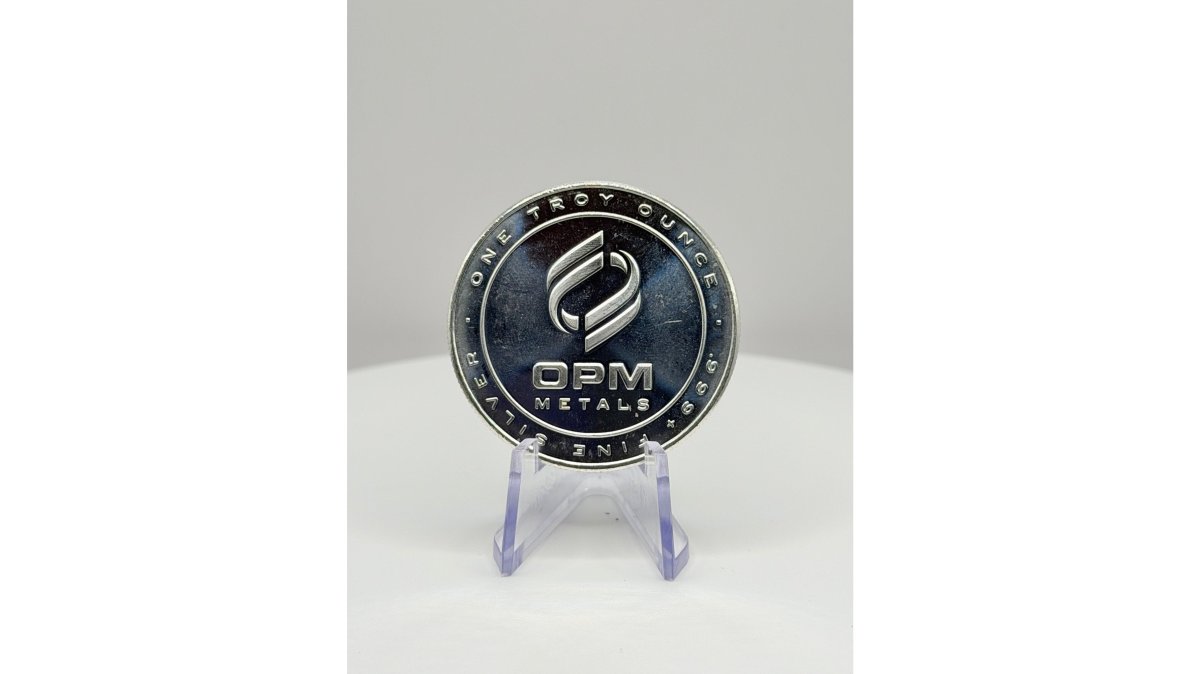
For buyers building a core position, 1 oz .999 fine silver rounds keep premiums lower than fractional alternatives because the fixed costs spread across a full troy ounce. MMmetalsandmore stocks options like the Ohio Precious Metals OPM 1 oz .999 Fine Silver Round at $91.00 and the 1 oz Silver Buffalo Round .999 Fine Silver Bullion at $90.01, both GST/HST exempt as investment-grade fine bullion.
Ohio Precious Metals OPM 1 oz .999 Fine →
Taxes, Resale, and Premium Recovery
Premium recovery decides whether a purchase made sense. You recover the premium when spot rises enough to cover what you paid above spot, plus any buy-sell spread on the way out. Until then, you are underwater on the premium even if spot has moved in your favor.
The Recovery Math
The calculation is straightforward once you separate the two numbers:
- Your cost basis = spot price at purchase + premium paid.
- Your break-even spot price = cost basis, adjusted for any tax treatment and the dealer's buy-back spread.
- Your recovery point = the spot price at which selling nets you back your full cost basis.
Tax Treatment Changes the Math
Investment-grade fine bullion is generally exempt from GST/HST, which lowers your effective cost basis from day one compared to a taxable purchase. That exemption does not apply to every product, numismatic coins, collectibles, and items below investment-grade purity thresholds are typically treated differently. Confirm current rules with the Canada Revenue Agency guidance on GST/HST and investment-grade precious metals before assuming an exemption applies to a specific product.
Resale Liquidity and the Second Spread
Resale liquidity matters just as much as the buy-side premium. Recognized, verifiable bullion sells faster because buyers can price it against spot without a grading step. Rounds from established mints and refineries, including vintage pieces like the 1991 Sunshine Mint 1 oz .999 Fine Silver Round at $91.76, carry that recognition.
Your true cost basis is spot price plus premium, adjusted for tax treatment and the resale spread. Track all of them, or you cannot tell whether a sale actually made money.
Conclusion
Premiums are not a fee to negotiate away; they are the price of turning raw metal into something you can hold, store, and resell. Buyers who track percentage over spot, understand why silver premiums move faster than gold, and separate bullion from numismatic pricing avoid the trap that catches most beginners.
Frequently Asked Questions
What is a good premium to pay for gold?
A reasonable premium on common gold bullion coins and bars typically falls in the low single-digit percentage range over spot. Larger bars usually carry smaller premiums than smaller coins because fabrication and packaging costs spread across more metal. Sovereign coins from national mints often sit slightly higher than private-mint bars of the same weight. Always compare the percentage over spot, not the dollar amount, since spot moves daily.
Why is the premium on silver so high?
Silver premiums run higher than gold because the metal is cheaper per ounce, so fixed costs like minting, packaging, shipping, and insurance eat a larger share of the final price. Retail demand also swings harder for silver, and inventory shortages push premiums up fast. Products like the 1 oz Silver Buffalo Round show how a widely recognized design can keep liquidity strong even when premiums widen.
How do minting and refining costs affect precious metals premiums?
Refining fees cover turning raw ore or scrap into .999 fine metal. Minting costs cover striking, quality control, and packaging. Both are fixed per unit, so they hit small coins harder than large bars. Dealer margin and shipping add the rest. When you see a round priced at $90.01 versus one at $94.02, that gap often reflects design licensing, mint reputation, and secondary-market condition rather than metal content.
Do premiums change based on the weight of the bullion bar or coin?
Yes. A 1 oz round carries a higher percentage over spot than a 10 oz or 100 oz bar because the same labor and packaging apply to far less metal. For stackers building ounce count on a budget, 1 oz rounds remain the practical entry point. Buying larger bars lowers the percentage premium but reduces flexibility when you want to sell part of your holding.
Are premiums on collectible coins different from bullion premiums?
They are a different category entirely. Bullion premiums track spot plus fabrication and dealer costs. Numismatic premiums reflect rarity, grade, historical significance, and collector demand, and they can run many multiples of spot. A vintage round like the 1991 Sunshine Mint piece carries a modest collector premium, while a graded key-date coin can carry thousands over its melt value.
Why do silver premiums fluctuate more than gold premiums?
Silver's lower price per ounce makes its market thinner and more sensitive to retail buying surges. When demand spikes, refiners and mints cannot scale fast enough, and inventory shortages widen the buy-sell spread. Gold's deeper, more liquid market absorbs demand shocks with smaller premium swings. This is why factors affecting silver premiums deserve separate attention from gold.
The gap between spot price and retail price is where most new buyers lose money without realizing it. MMmetalsandmore helps you close that gap with transparent pricing on investment-grade bullion, a broad selection of collectible coins, and secure shipping on every order. Get started with MMmetalsandmore and build your position with confidence in what you are actually paying for.