

Table of Contents
- Copper Bullion: What You're Actually Buying
- Copper Bullion Price Per Pound vs. Premiums You Pay
- Copper Bullion vs Gold Bullion: Where Each One Fits
- Storing Copper Bullion: Space, Weight, and Oxidation
- Taxes, Counterfeits, and Resale Liquidity in Canada
- Pros, Cons, and the Opportunity Cost of Copper
- Conclusion: Who Copper Bullion Actually Makes Sense For
- Frequently Asked Questions
Last Updated: October 4, 2026
Copper Bullion: What You're Actually Buying
Copper bullion is a physical investment product made of refined copper, sold as bars or rounds rather than as circulating currency. At MMmetalsandmore, we sell copper bullion alongside gold and silver, and the question we hear most often is whether it deserves a place in a portfolio at all. The honest answer depends on what you expect it to do.
Copper as an Industrial Metal and a Precious Metal
Copper sits in an unusual spot. It is a base metal by classification, not a precious metal like gold or silver, yet it trades on the same commodity exchanges and carries a spot price that moves daily. Roughly half of global copper demand comes from electrical applications, wiring, motors, and construction, which means its price tracks industrial activity more closely than it tracks investor sentiment.
That distinction matters. Gold rises when people are frightened. Copper rises when factories are busy.
Copper Bullion Price Per Pound vs. Premiums You Pay
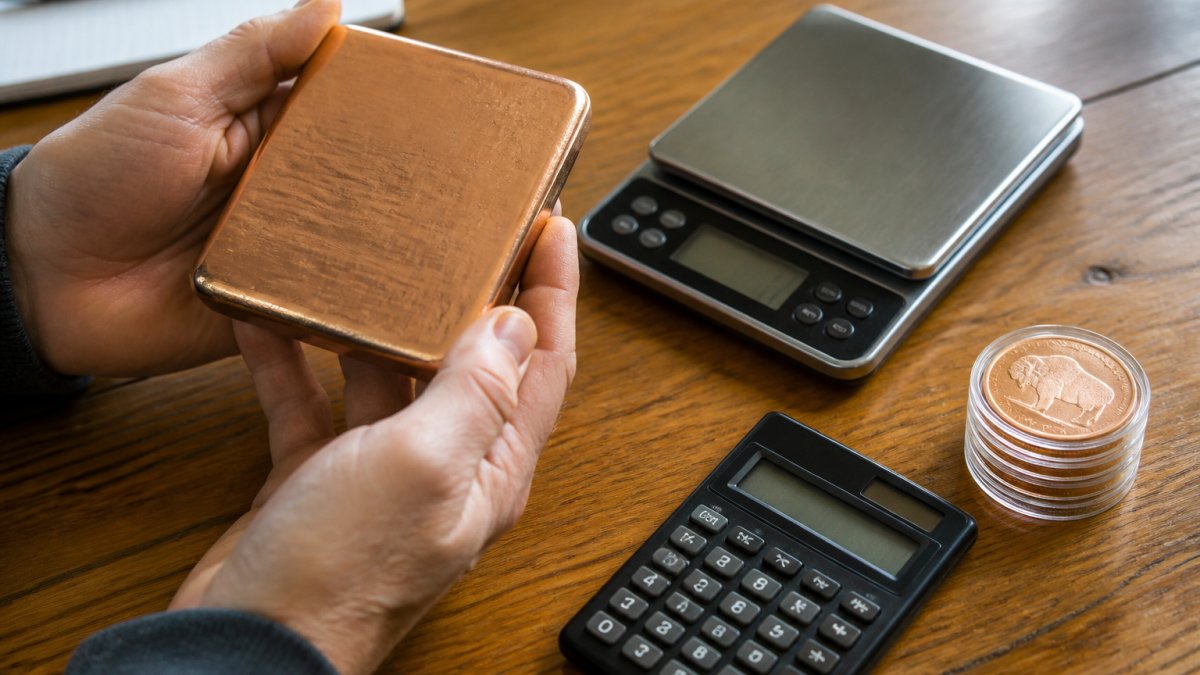
The copper bullion price per pound you see quoted online is the spot price, and it is not the price you pay. Dealers add a retail premium on top to cover minting, packaging, shipping, and margin. On a low-value metal, that premium is proportionally enormous.
Melt Value, Spot Price, and Retail Premium Explained
Melt value is what your copper is worth as raw metal at the current spot price. Retail premium is everything above that. A 1 oz copper round with a melt value measured in cents can retail for several dollars, which means the premium can exceed the metal content many times over.

Kilo Bars, 10 oz Bars, and 1 oz Rounds: Weight Units Matter
Weight units trip up more new buyers than anything else. Copper bullion is commonly sold in avoirdupois ounces, not troy ounces, and the two are not the same. A troy ounce is heavier than an avoirdupois ounce, so a "1 oz" copper round and a "1 oz" silver round do not weigh the same amount.
Larger formats spread the premium thinner. Our 1kg Pure Copper Square Bar is sealed and stamped .9999 fine, and the per-gram premium on a kilo is far lower than on a single round. For smaller budgets, the Scottsdale Mint Lion Stacker 1 oz Copper Round interlocks with others in the series, so a stack stays tidy.
Copper Bullion vs Gold Bullion: Where Each One Fits
Copper bullion and gold bullion serve different jobs, and comparing them directly misses the point. Gold is a monetary asset: dense value, easy to store, globally liquid, and historically used as a store of wealth. Copper is an industrial commodity that happens to be sold in collectible form.
| Factor | Copper Bullion | Gold Bullion |
|---|---|---|
| Value per kilogram | Low | Very high |
| Storage footprint | Large | Tiny |
| Premium over melt | Often very high | Usually low |
| Industrial demand | Primary driver | Minimal |
| Resale ease | Limited | Broad |
A kilogram of gold fits in a pocket. A kilogram of copper does not, and it will never be worth what the gold is worth.
Storing Copper Bullion: Space, Weight, and Oxidation
Storing copper bullion is a logistics problem before it is an investment problem. Copper is roughly eight times denser than water, so a modest-looking box gets heavy fast. A few kilos is manageable on a shelf; a serious stack needs shelving rated for the load.
Oxidation is the other issue. Copper tarnishes when exposed to air and moisture, dulling from bright red to brown over time. That patina does not reduce melt value, but it does affect what a collector will pay for a display piece. Sealed packaging, like the assay seal on our kilo bar, slows this down.
Taxes, Counterfeits, and Resale Liquidity in Canada
Tax treatment, counterfeit risk, and resale are where copper gets uncomfortable, and most guides skip all three. Each deserves its own treatment.
How Copper Bullion Is Taxed
Under Canadian tax rules, bullion coins and bars of high purity in gold and silver can qualify for an exemption from GST/HST. Copper does not meet those purity and metal-type conditions, so copper bullion is generally taxable when you buy it. That means the premium you pay is not the only drag on your entry price, the tax is stacked on top of it.
On the income side, the Canada Revenue Agency generally treats gains on commodity bullion as either capital gains or business income depending on your intent and activity level. A collector who sells a few pieces after years of holding is treated differently from someone buying and flipping rounds regularly.
Counterfeit Detection: Verifying Purity Before You Buy
Counterfeits are a real concern in copper because the metal is cheap to fake. Plated zinc or steel rounds stamped to look like copper circulate in online marketplaces, and as premiums rise the incentive to fake grows.
A few practical checks catch most fakes:
FENRIR THE WORLD BREAKER – 1 TROY OUNCE PURE COPPER ROUND →
- Weight. Weigh the piece against the stated specification. Copper bullion is commonly sold in avoirdupois ounces, not troy ounces, and a plated steel round will not match the expected mass.
- Diameter and thickness. Counterfeiters often get the weight close but the dimensions wrong. Calipers are cheap and settle the question quickly.
- Magnetism. Pure copper is not magnetic. A strong magnet that sticks to the piece is a red flag for a steel or plated core.
- Sound. A genuine copper round rings with a distinct tone when tapped; a plated base-metal round sounds duller.
- Source. Buy from a dealer who stands behind authenticity and offers a return path. At MMmetalsandmore, every order ships securely and we back what we sell.
For higher-value pieces, a specific gravity test or an X-ray fluorescence reading at a local jeweler or assay office gives a definitive answer. Neither is expensive relative to the cost of a counterfeit-heavy stack.
Resale Liquidity: Who Actually Buys It Back
Resale liquidity is the weakest link in the copper case. Gold and silver have deep dealer networks and tight buy-sell spreads. Copper has a thin secondary market: coin shops often will not buy it, and scrap yards pay industrial scrap rates with no premium at all.
The practical consequence is that your exit is narrower than your entry. You can buy copper bullion from many dealers; you can sell it well from far fewer. Before you buy, identify the specific buyer you would approach, a dealer who handles copper, a collector forum, or a local coin shop that has confirmed it will make an offer.
Pros, Cons, and the Opportunity Cost of Copper
The case for copper is affordability and tangibility. A 1 oz round costs less than most lunches, which lets new stackers hold physical metal without committing serious capital. Copper rounds like our Fenrir the World Breaker 1 Troy Ounce Pure Copper Round are genuinely enjoyable objects, and collecting them is a legitimate hobby.

The case against is arithmetic, and it is the part most guides leave out. If you pay a large premium over melt value, you need a large price move to profit. Meanwhile, that same money in a broadly diversified portfolio could compound. That is opportunity cost, and it is the strongest argument against copper as an investment rather than a collection.
A Simple Break-Even Framework
You do not need a spreadsheet to see the problem, but the math is worth walking through. Take a 1 oz copper round with a melt value measured in cents that retails for several dollars. The premium is a multiple of the metal content.
Now compare the same money placed in a low-cost, broadly diversified exchange-traded fund. The fund carries no storage burden, no oxidation risk, no sales tax on entry in most accounts, and no thin resale market. The comparison is not close on a pure return basis.
When the Opportunity Cost Is Worth Paying
Opportunity cost is not automatically disqualifying. It is a price you pay for something else you want. Copper bullion can be rational when:
- You want to hold physical metal and the entry cost of gold or silver is out of reach right now.
- You are building a collection and the enjoyment is part of the return.
- You have a deliberate industrial-demand thesis and accept the storage and liquidity trade-offs.
It is a poor fit when you are treating it as a wealth-retention vehicle, a hedge against currency weakness, or a substitute for a diversified portfolio. Those jobs belong to assets with tighter spreads, lower storage costs, and broader buyer networks.
- Pros: low entry cost, physical and tangible, industrial demand story, collectible appeal
- Cons: heavy and bulky, high premiums on small pieces, tarnishes, thin resale market, taxable, meaningful opportunity cost versus diversified alternatives
Conclusion: Who Copper Bullion Actually Makes Sense For
Copper bullion makes sense for collectors who enjoy the metal and want an affordable entry into physical bullion. It makes poor sense as a wealth-retention vehicle or a serious portfolio allocation, because premiums, storage, tax, and resale all work against you.
If you want copper for the pleasure of owning it, buy pieces you actually like. Our 2025 Independence Day 5 oz Colorized Copper Round is a display piece first and an investment second, which is exactly the right framing. MMmetalsandmore offers premium copper, gold, and silver bullion with secure shipping and service built for collectors. Browse the collection and find the pieces that fit your goals.

Frequently Asked Questions
How much is 1 lb of copper bullion worth?
A pound of copper bullion is worth its melt value plus whatever premium the seller adds. One avoirdupois pound is about 14.58 troy ounces, so the metal value tracks the spot price of copper, which moves daily. The retail price you pay for a finished round or bar sits above that spot figure because it covers minting, packaging, and dealer margin. That gap between spot and retail is the number that decides whether a purchase makes sense for you.
Is copper a better investment than gold?
They do different jobs. Gold bullion holds value across decades and trades in a deep, liquid market, which suits wealth retention and portfolio diversification. Copper is an industrial metal tied to construction, wiring, and manufacturing demand, so its price swings harder with economic cycles. Copper costs far less per unit, so it is easier to stack in volume, but the retail premium on small copper pieces can eat into any gain. Most investors treat copper as a supplement, not a replacement.
Are there tax implications for buying and selling copper bullion in Canada?
Copper bullion does not qualify for the GST/HST exemption that applies to certain high-purity gold and silver coins and bars, so expect tax to apply on the purchase. On the sale side, any gain is generally treated as either income or a capital gain depending on how you hold and trade it. The Canada Revenue Agency expects reporting either way. Records of purchase price, premiums, and storage costs matter, so keep receipts. Confirm your own situation with an accountant.
What are the main challenges of storing copper bullion?
Weight and space come first. Copper is dense but cheap, so a meaningful dollar position takes up far more room and mass than the same amount in gold. Oxidation is the second issue. Copper tarnishes when exposed to air and moisture, which dulls the surface but does not reduce melt value. Sealed capsules, silica packs, and a dry, stable spot help. A 1kg bar and a handful of 1 oz rounds fit in a small safe; larger stacks need shelving and a plan.